
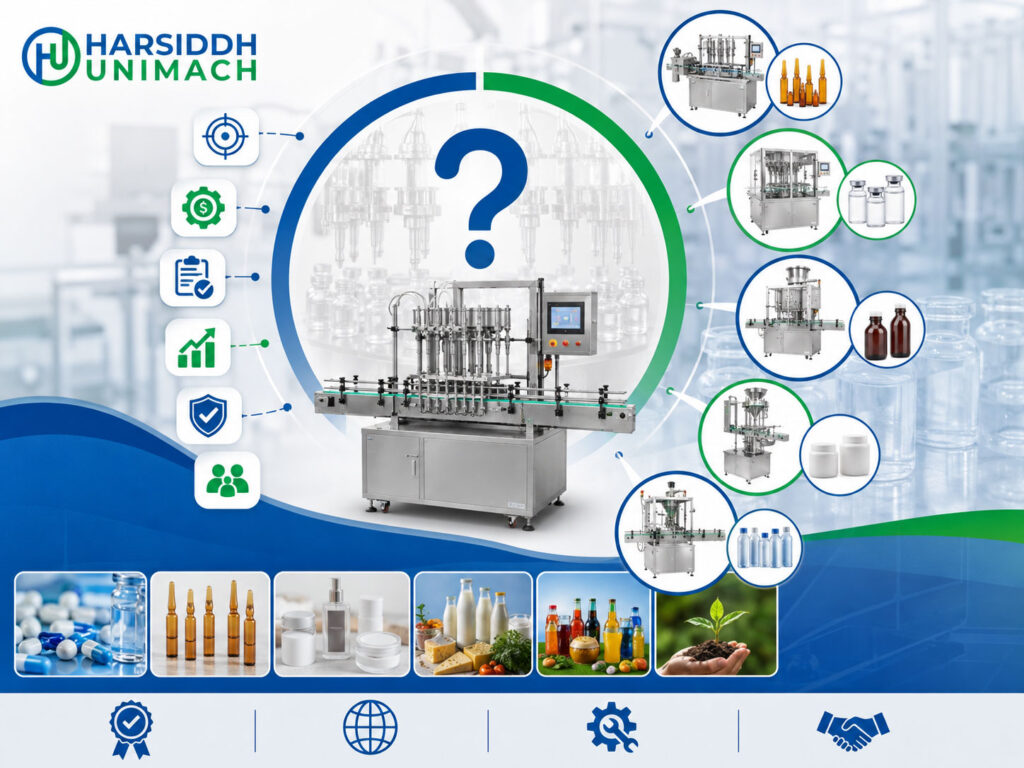
Filling machines are used far beyond the pharmaceutical industry. Food producers fill honey, sauces and oils; cosmetic brands fill lotions, creams and shampoos; household product companies fill detergents, sanitizers and disinfectants; chemical and automotive suppliers fill lubricants, engine oils and industrial liquids. Each industry has its own products, containers, regulations and priorities, and each needs a filling machine that fits.
This guide focuses on food, cosmetic, personal care, household, chemical and lubricant production lines. It explains how to choose a filling machine step by step, with practical guidance for each industry. If you work in pharmaceutical production, see our dedicated guide on how to choose the right filling machine for your pharmaceutical production line.
Step 1: Understand How Your Product Behaves
The product is the starting point for every decision. Ask:
| Question | Why It Matters |
|---|---|
| Is it thin, viscous, a paste or a powder? | Determines the type of filling technology |
| Does it foam? | Needs diving nozzles and gentle filling |
| Does it contain particles or chunks? | Needs large passages and suitable pumps |
| Does viscosity change with temperature? | May need temperature control or weight filling |
| Is it flammable or corrosive? | Requires suitable materials and safety design |
| Is it a food product? | Requires food-grade design and hygiene |
| Does it string or drip? | Needs positive shut-off nozzles |
Step 2: Define Your Containers
- Type – bottles, jars, pouches, tubes, cans, jerrycans
- Material – glass, PET, HDPE, metal, flexible film
- Size range – from small samples to large refill packs
- Neck size – narrow necks limit nozzle size and filling speed
- Stability – tall, light or irregular containers may need special handling
- Closure – screw cap, pump, trigger, flip-top, lug cap, spout cap
Step 3: Choose the Filling Technology
| Technology | How It Works | Best For |
|---|---|---|
| Piston | Fixed stroke volume | Creams, lotions, sauces, viscous liquids |
| Servo piston | Programmable stroke and speed | Multi-product lines, precise dosing |
| Gear pump | Revolutions of meshing gears | Oils, lubricants, smooth viscous liquids |
| Gravity | Time-controlled flow | Thin, free-flowing liquids |
| Overflow | Fills to a uniform level | Clear bottles of thin liquids |
| Weight | Load cell under the container | Large containers, oils, chemicals |
| Auger | Screw revolutions | Powders, spices, granules |
Servo machines such as the servo based piston filling machine and the servo based gear pump filling machine are popular across industries because they allow quick changes between products and pack sizes.
Step 4: Consider Your Industry’s Requirements
Food
- Hygiene – food-grade materials, smooth cleanable surfaces, easy dismantling
- Products – honey, sauces, jams, oils, syrups, spreads, beverages, powders
- Challenges – viscosity changes, particles, hot filling for some products, flavour carry-over
Typical machines: the Automatic Honey Filling Machine and the Automatic Edible Oil Filling Machine. For oils, read our cooking oil filling machine working principle. For powders such as spices or nutritional products, see the auger type powder filling machine.
Cosmetics and Personal Care
- Appearance – clean filling, no drips on bottles, attractive fill levels
- Products – lotions, creams, gels, shampoos, conditioners, serums, hair oils
- Challenges – foaming, many SKUs and frequent changeovers, varied bottle shapes
Typical machines: the Automatic Cosmetic Bottle Filling Machine, the cosmetic bottle filling machine and the lotion and gel filling machine. Read our lotion filling machine working principle. For petroleum jelly and similar products, see the petroleum jelly filling machine.
Household Products and Sanitizers
- Material compatibility – detergents and disinfectants can attack some seals and plastics
- Safety – alcohol-based sanitizers are flammable and need appropriate precautions
- Products – liquid soaps, dishwash liquids, sanitizers, disinfectants, cleaners
Typical machines: the Automatic Disinfectant Filling Machine. Read our sanitizer filling machine working principle.
Lubricants and Automotive Oils
- Viscosity range – from light oils to heavy gear oils
- Cleanliness – oil on containers causes leaks and label failures
- Packs – bottles, cans, buckets and drums
Typical machines: the servo based oil and viscous filling machine. Read our engine oil filling machine working principle.
Chemicals
- Material compatibility – corrosive or reactive chemicals need suitable contact materials
- Safety – containment, ventilation and protection for operators
- Products – agrochemicals, industrial liquids, solvents, additives
Chemical filling often requires careful specification of materials, seals and electrical design according to the product’s hazards and local regulations.
Flexible packaging
Many industries are moving to spout pouches for refills and lighter packaging. See the spout pouch filling machine.
Step 5: Determine the Output You Need
- Estimate annual or monthly demand for each product.
- Convert to containers per shift.
- Allow for realistic efficiency, including changeovers, cleaning and breaks.
- Add room for growth.
Then choose the number of filling heads and the machine type that meets this requirement without excessive overcapacity.
Step 6: Choose the Level of Automation
| Level | Description | Best For |
|---|---|---|
| Semi-automatic | Operator places containers; machine fills | Start-ups, small batches, many products |
| Automatic linear | Containers indexed in groups | Growing production, flexibility |
| Automatic rotary | Continuous filling on a carousel | High volumes of fewer products |
| Monoblock | Filling and capping on one frame | Space saving, fewer transfers |
| Complete line | Unscrambler to packing | High-volume, dedicated production |
A monoblock such as the liquid bottle filling and capping machine (monoblock) can be a cost-effective step up for growing businesses.
Step 7: Plan for Flexibility
If you run many products or pack sizes, look for:
- Recipe-based settings on servo machines
- Tool-less change parts and quick nozzle changes
- Wide container range
- Easy cleaning between products, especially when changing colours or fragrances
For thick products, check that pumps, valves and nozzles are designed for the full viscosity range you expect, not just your current product.
Step 8: Think About the Whole Line
The filler must work with:
- Container feeding – unscramblers or manual loading
- Capping – screw, ROPP, lug, pump, trigger or flip-top caps
- Sealing – induction seals for leak protection and tamper evidence
- Labelling and coding
- Packing – cartons, shrink wrap, cases
Match speeds across all machines and add buffers between them so brief stoppages do not stop the whole line.
Step 9: Compare Total Cost, Not Just Price
| Cost Factor | What to Consider |
|---|---|
| Purchase price | Machine, change parts, options |
| Product loss | Overfill, drips, start-up waste |
| Labour | Operators needed per shift |
| Changeovers | Time lost each changeover × number per year |
| Maintenance | Wear parts, service, downtime |
| Utilities | Power, compressed air |
| Lifespan | How long the machine will meet your needs |
Common Mistakes to Avoid
- Choosing on price alone – a cheaper machine can cost more through overfill, drips, downtime and slow changeovers.
- Ignoring future products – a machine chosen for one product may not suit next year’s thicker cream or larger pack.
- Overlooking material compatibility – seals and hoses that swell or degrade with your product cause leaks and contamination.
- Underestimating changeovers – in cosmetics and household products, frequent changeovers can cost more output than slow filling.
- Skipping trials – testing with your actual product and containers is the best way to confirm suitability.
- Forgetting the rest of the line – a fast filler is wasted if capping or labelling cannot keep up.
Questions to Ask Suppliers
- Can you run trials with our product and containers?
- What fill accuracy and speed can we expect for our products?
- How long does a changeover take, and what parts are changed?
- Which contact materials and seals are used, and are they compatible with our products?
- What safety features are included for our products?
- What training, spare parts and service support do you provide?
- Can the machine be upgraded later with more heads or features?
- Can you supply or integrate cappers, sealers and labellers for a complete line?
Running a Useful Trial
A good trial tells you more than any brochure. Bring enough product and containers for an extended run, not just a few fills. Check accuracy across all heads, watch for foaming, dripping and stringing, and look at how clean the containers are after filling. Time a changeover to a second product or pack size, and test the machine at the speed you actually need. If possible, involve the operators who will run the machine, because they will notice practical issues that others may miss.
Labelling and Declared Quantity
Whatever the industry, packs must contain at least the declared quantity and carry the information required in your market. Filling machines with accurate, repeatable dosing make it easier to meet declared quantity rules without wasteful overfilling. Always follow the packaging, labelling and safety regulations that apply to your products and markets.
Hygiene, Safety and Compliance by Industry
| Industry | Hygiene Needs | Safety Considerations | Typical Compliance Focus |
|---|---|---|---|
| Food | Food-grade contact parts, cleanable design, allergen and flavour control | Hot filling, slippery floors | Food safety rules, declared quantity, labelling |
| Cosmetics | Clean, smooth surfaces, easy cleaning between fragrances and colours | Generally low; some flammable ingredients | Cosmetic regulations, labelling |
| Household | Cleanable parts, compatible seals | Flammable or irritant products | Chemical labelling, product safety |
| Lubricants | Oil-free surroundings, drip control | Slippery floors, combustible products | Declared quantity, labelling |
| Chemicals | Compatible materials, containment | Corrosive, toxic or flammable products | Hazard labelling, transport rules |
Matching the machine’s design to these needs prevents costly modifications later.
Planning for Growth
Most businesses expect volumes and product ranges to grow. When choosing a filling machine, think about the next few years, not just today. Choose machines that can accept additional filling heads, handle a wider range of containers or be integrated into a larger automated line later. Leave floor space and utility capacity for future equipment, and keep earlier semi-automatic machines in service for trial batches and small orders once a faster line is installed.
Industry Quick Reference
| Industry | Typical Products | Common Filling Technologies | Key Priority |
|---|---|---|---|
| Food | Honey, sauces, oils, powders | Piston, gear pump, weight, auger | Hygiene and accuracy |
| Cosmetics | Lotions, creams, shampoos | Piston, servo piston | Appearance and flexibility |
| Household | Detergents, sanitizers | Piston, gravity, overflow | Material compatibility and safety |
| Lubricants | Engine and gear oils | Gear pump, piston, weight | Cleanliness and viscosity range |
| Chemicals | Industrial liquids | Piston, pump, weight | Safety and materials |
A Quick Selection Checklist
- Product behaviour documented
- Containers and closures defined
- Filling technology selected
- Industry hygiene and safety needs addressed
- Output and automation level decided
- Flexibility for future products considered
- Line integration planned
- Trials completed with real product
- Total cost of ownership compared
Frequently Asked Questions
How do I choose the right filling machine for my production line? Start with your product’s behaviour and containers, then choose the filling technology, consider industry requirements, determine output and automation level, plan for flexibility and compare total cost.
Which filling technology is most versatile? Servo-driven piston fillers handle a wide range of products and allow quick changes between products and pack sizes.
What should food manufacturers look for? Food-grade materials, hygienic design, easy cleaning and accurate dosing.
What matters most for cosmetic filling? Clean filling without drips, attractive fill levels, foam control and fast changeovers between many products.
Is a semi-automatic machine a good start? Yes, for start-ups, small batches and many products. Automatic machines can be added as volumes grow.
Need help choosing a filling machine for your industry? Contact our team or send an inquiry with your products, containers and output targets.