
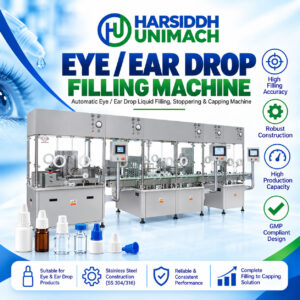
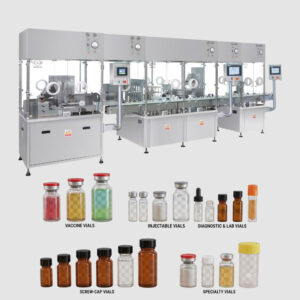
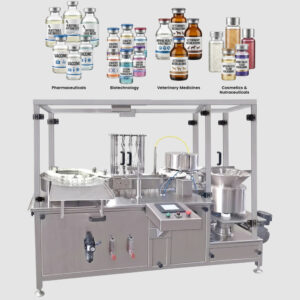
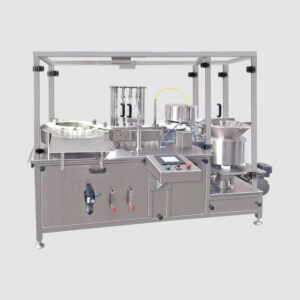
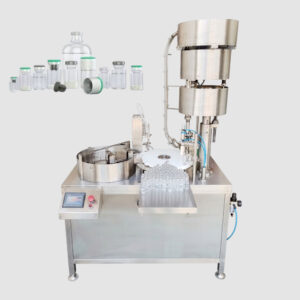
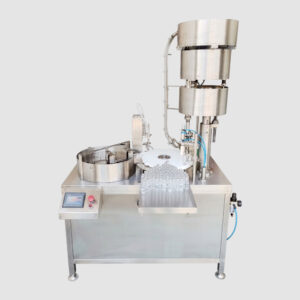
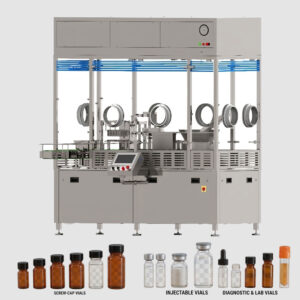
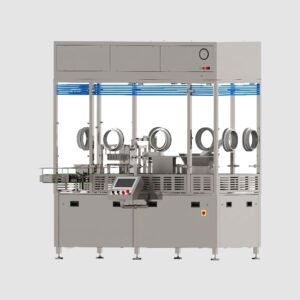
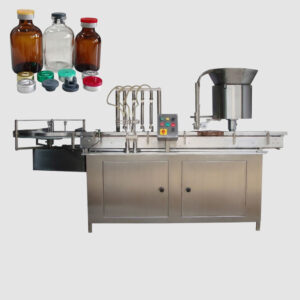
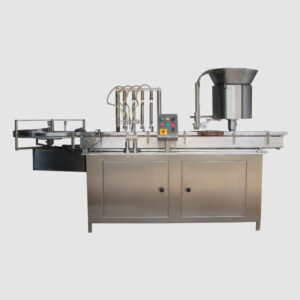
Vial Filling Machines
Precision-Engineered Vial Filling Solutions for Pharmaceutical Manufacturing
Harsiddh Unimach Pvt. Ltd. is a trusted Vial Filling Machine Manufacturer in India, providing precision-engineered vial filling solutions for pharmaceutical, biotech, healthcare, veterinary, and other specialized manufacturing applications. Our range of Vial Filling Machines is designed to deliver accurate dosing, consistent production performance, hygienic operation, and reliable vial handling.
From laboratory and pilot-scale requirements to medium- and high-speed production, our vial filling systems can be configured according to product characteristics, vial dimensions, filling volume, production capacity, and process requirements.
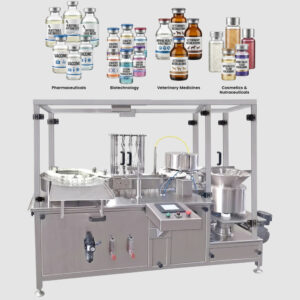
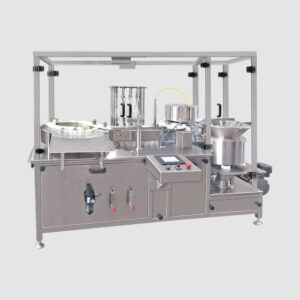
Our product range includes liquid vial filling machines, rotary vial filling machines, servo-based vial filling systems, multi-head vial fillers, laboratory vial filling machines, pilot-scale systems, and integrated filling and stoppering solutions.
Our Vial Filling Machine Range
Harsiddh Unimach offers different vial filling configurations to meet varying pharmaceutical production requirements.
Liquid Vial Filling Machines
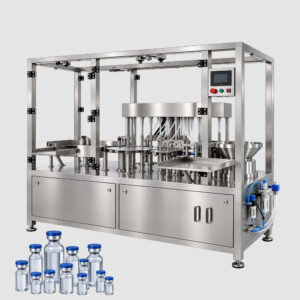
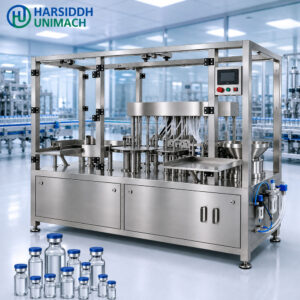
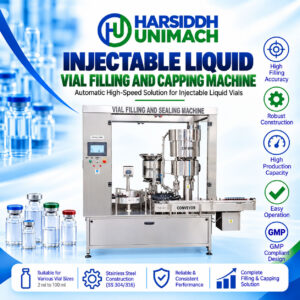
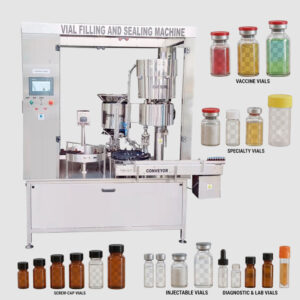
Our Liquid Vial Filling Machines are designed for accurate and repeatable filling of pharmaceutical liquids into glass vials. Depending on the application, the machines can be configured with suitable dosing systems, filling heads, pumps, and nozzle arrangements.
These machines are suitable for applications involving aqueous solutions, injectable liquids, pharmaceutical formulations, oils, and other compatible liquid products.
Rotary Vial Filling Machines
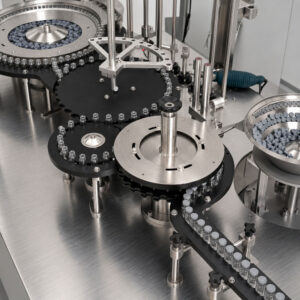
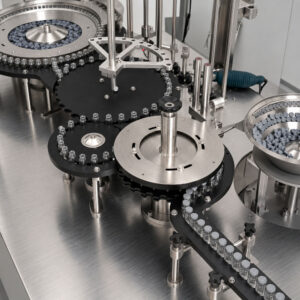
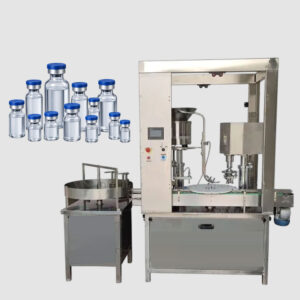
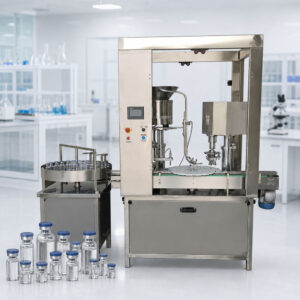
Rotary Vial Filling Machines are designed for continuous vial handling and high-volume production. The rotary operating mechanism provides controlled vial movement through the filling process while supporting consistent dosing and efficient production.
These systems can be integrated with upstream vial washing and downstream stoppering, capping, and inspection operations to create a complete production line.
Servo-Based Vial Filling Machines
Servo-based technology provides electronically controlled dosing and allows operators to make precise filling adjustments through the machine control system.
A Servo-Based Vial Filling Machine can be considered for applications where accurate volume control, repeatability, recipe management, and flexible production settings are important.
Multi-Head Vial Filling Machines
Multi-head configurations, including two-head, four-head, and six-head systems, provide different production capacities according to the required output.
Selecting the appropriate number of filling heads allows manufacturers to balance production speed, product characteristics, vial size, and available production space.
Vial Filling and Stoppering Machines
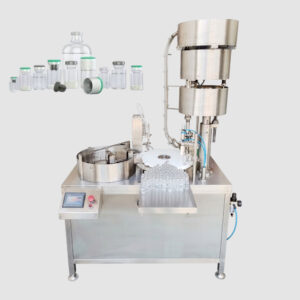
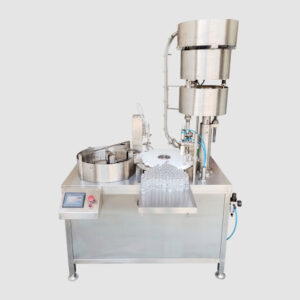
For pharmaceutical applications requiring filling followed by rubber stopper placement, integrated Vial Filling and Stoppering Machines combine these operations within a coordinated system.
Performing filling and stoppering in a controlled sequence can reduce handling between operations and help minimize the time that filled vials remain open before closure.
Laboratory and Pilot-Scale Vial Filling Machines
Laboratory and pilot-scale production requires flexibility and controlled dosing rather than simply maximum production speed.
Our Laboratory Vial Filling Machines and Pilot Scale Vial Filling Machines are suitable for research, development, process trials, small-batch manufacturing, and scale-up activities.
Key Features of Our Vial Filling Machines
Harsiddh Unimach vial filling systems can be engineered with features designed around pharmaceutical production requirements.
- Precision-controlled liquid dosing
- Multiple filling-head configurations
- Suitable configurations for different vial sizes
- Stainless-steel construction options
- SS 316L product-contact components
- PLC-based machine control
- Touchscreen HMI operation
- No Vial – No Fill functionality
- Adjustable filling volume
- Controlled vial handling
- Integrated rubber stoppering options
- Quick changeover arrangements
- Safety interlocks
- Recipe-based operation on selected models
- Compatibility with LAF and controlled cleanroom environments, where applicable
- Options for integration with vial washing, stoppering, capping, and inspection systems
The exact configuration, filling accuracy, speed, and automation level depend on the selected machine model and application.
Applications of Vial Filling Machines
Vial filling equipment is widely used where products need to be accurately dispensed into small-volume glass containers.
Our vial filling solutions can be configured for applications across:
- Pharmaceutical manufacturing
- Injectable formulations
- Biotech production
- Veterinary medicines
- Laboratory and R&D applications
- Sterile liquid manufacturing
- Ophthalmic and specialty liquid applications
- Healthcare products
- Research and development facilities
Product compatibility should be evaluated based on viscosity, formulation characteristics, foaming behavior, particulate content, filling volume, sterility requirements, and container specifications.
Why Choose Harsiddh Unimach for Vial Filling Machines?
Choosing a vial filling machine involves more than selecting a production speed. The dosing technology, filling range, vial dimensions, product properties, stoppering requirements, cleanroom environment, and future production plans all influence the appropriate machine configuration.
Harsiddh Unimach Pvt. Ltd. combines engineering experience with application-focused machine design to provide vial filling solutions for different production requirements.
Engineering Experience
With more than 35 years of engineering experience, Harsiddh Unimach has developed machinery for pharmaceutical and other industrial applications.
Pharmaceutical-Focused Construction
Our vial filling equipment can be engineered with pharmaceutical-grade materials and suitable hygienic design considerations, including SS 316L product-contact components on applicable models.
Flexible Machine Configurations
Different filling-head arrangements, dosing technologies, vial-handling systems, and stoppering configurations allow the machine to be adapted to specific production requirements.
Controlled Filling Performance
Precision dosing systems are designed to provide consistent fill volumes and minimize product loss when correctly configured, operated, and maintained.
Production Line Integration
Vial filling machines can be incorporated into wider production systems involving vial washing, filling, stoppering, capping, inspection, and other downstream processes.
Quality and Global Standards
Harsiddh Unimach states that its machinery manufacturing is supported by ISO 9001:2015 quality standards, CE certification, and DUNS registration. The company serves domestic and international markets.
How to Select the Right Vial Filling Machine
The right vial filling system depends on your product and manufacturing requirements. Before selecting a machine, consider the following parameters:
1. Product Type
Determine whether the product is an aqueous liquid, oil, suspension, viscous formulation, or another specialized pharmaceutical formulation.
2. Filling Volume
Define the required filling range and individual vial fill volume. This helps determine the appropriate dosing system and machine configuration.
3. Vial Size and Shape
Vial diameter, height, neck dimensions, and container design affect vial handling, star-wheel configuration, filling nozzle positioning, and changeover requirements.
4. Required Production Capacity
Production requirements determine whether a two-head, four-head, six-head, rotary, or other configuration is appropriate.
5. Filling Accuracy
For pharmaceutical products, consistent dosing is an important production parameter. The filling system should be selected according to the required accuracy and product characteristics.
6. Stoppering Requirements
If rubber stopper placement is required immediately after filling, an integrated filling and stoppering configuration can simplify the production process.
7. Cleanroom and Aseptic Requirements
The machine configuration should be evaluated according to the facility’s cleanroom classification, process requirements, airflow arrangement, sterilization procedures, and applicable regulatory requirements.
8. Future Production Requirements
Consider future changes in production volume, vial sizes, products, and automation requirements before finalizing the machine configuration.
Vial Filling Machine Working Process
A typical liquid vial filling process may involve the following stages:
Vial Feeding → Vial Positioning → Filling → Stoppering → Capping → Inspection → Collection
Depending on the machine configuration, some operations may be integrated into a single machine or connected as separate modules.
The filling stage uses a suitable dosing mechanism to dispense the required quantity of product into each vial. Sensors and controlled vial handling systems can help ensure that filling occurs only when a vial is correctly positioned.
After filling, an integrated stoppering system can place rubber stoppers into the filled vials before the vials proceed to subsequent operations.
Vial Filling Machine for Pharmaceutical Production
Pharmaceutical manufacturing requires controlled and repeatable processes. Vial filling equipment therefore needs to be selected according to the formulation, container, production volume, filling accuracy, environmental conditions, and process validation requirements.
Harsiddh Unimach provides vial filling systems for different production scales, including laboratory, pilot, and production applications.
For sterile or aseptic applications, the machine and complete process should be evaluated together with the facility’s cleanroom design, LAF/RABS or isolator arrangement where applicable, sterilization procedures, environmental monitoring, and applicable regulatory requirements.
Frequently Asked Questions
What types of products can be filled into vials?
Vial filling machines can be configured for different compatible pharmaceutical liquids, including aqueous solutions, injectable formulations, oils, and selected suspensions. Product viscosity, foaming characteristics, particulate content, and formulation properties should be evaluated before selecting the dosing system.
Can one vial filling machine handle different vial sizes?
Yes, selected machine configurations can handle multiple vial sizes using appropriate change parts and adjustments. Harsiddh Unimach states that its vial fillers can be configured for vial sizes ranging from approximately 2 ml to 100 ml, depending on the machine model.
What is the difference between a liquid vial filling machine and a vial filling and stoppering machine?
A liquid vial filling machine primarily performs the filling operation. A vial filling and stoppering machine combines liquid filling with rubber stopper placement, reducing the need to transfer open filled vials between separate operations.
Are vial filling machines suitable for sterile pharmaceutical production?
Vial filling equipment can be designed for applications requiring controlled or sterile processing, but suitability depends on the complete process and facility design. Machine construction, cleanroom conditions, airflow protection, sterilization procedures, product-contact components, and process validation must all be considered.