
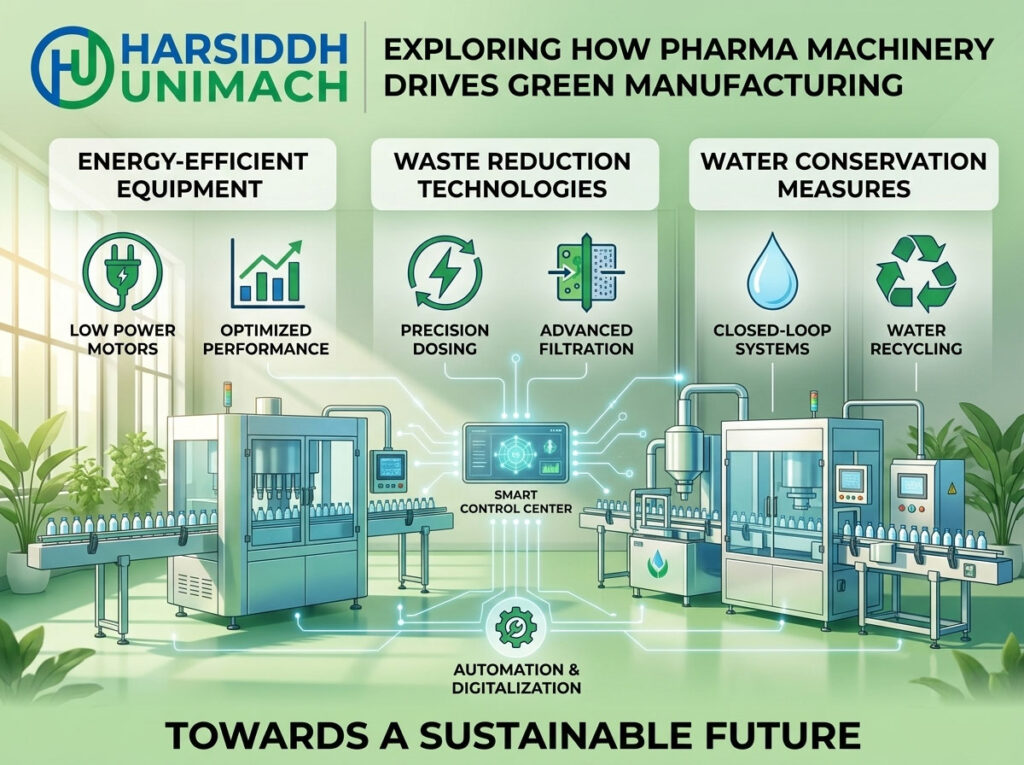
The pharmaceutical industry exists to protect health. Increasingly, that mission is understood to include the health of the environment that people live in. Manufacturing medicines uses significant amounts of energy, purified water, materials and packaging, and it generates waste. Customers, regulators, investors and employees are asking pharmaceutical companies to show how they are reducing that footprint.
For manufacturers, sustainability is not just about reputation. Many sustainability improvements also reduce costs: less energy, less water, less product loss and fewer rejects all show up directly in operating budgets. And much of that improvement depends on the machinery on the production floor.
In this article, we explore how pharmaceutical manufacturing is becoming more sustainable, with a particular focus on the role of filling, washing, sealing and packaging equipment. We look at energy, water, product and packaging waste, equipment lifecycle and practical steps that plants of any size can take.
Why Sustainability Matters in Pharma
- Resource intensity – sterile production in particular relies on purified water, water for injection, clean steam, controlled air and energy-hungry processes such as depyrogenation.
- Rising costs – energy, water treatment and waste disposal costs continue to rise in many regions.
- Customer expectations – large buyers, including healthcare systems and global pharma companies, increasingly ask suppliers and contract manufacturers about their environmental performance.
- Regulation and reporting – environmental reporting requirements are expanding in many markets.
- Talent – many employees want to work for companies that take sustainability seriously.
The challenge is that pharmaceutical manufacturing must never compromise on product quality, sterility or patient safety. Sustainable improvements must work within GMP, not around it.
Area 1: Energy Efficiency in Machinery
Energy is used throughout a pharmaceutical plant: in HVAC and cleanroom air handling, water systems, compressed air, heating and the production machines themselves. While HVAC is often the largest single user, machinery choices still make a real difference.
Efficient drives
Modern machines increasingly use servo motors and variable frequency drives instead of constant-speed motors with mechanical clutches and gearboxes. Servo and VFD systems use energy more closely matched to the actual load and can reduce consumption during idling. They also bring better process control, which reduces rejects. Examples include the Automatic Servo Based Liquid Filling Machine and the servo based piston filling machine.
Standby and idle modes
Machines that automatically reduce power when idle, for example by stopping conveyors, reducing heater output or switching off vacuum pumps, save energy during breaks, changeovers and upstream stoppages.
Heating efficiency
Equipment such as sterilizing tunnels, heated hoppers and induction sealers uses significant energy. Good insulation, accurate temperature control and heat recovery where practical all reduce consumption. Depyrogenation tunnels, such as the sterilizing tunnel for ampoules and vials, benefit from well-maintained insulation, seals and airflow balance.
Compressed air
Compressed air is one of the most expensive utilities to produce. Many machines use it for blow-off, cylinders and cleaning. Fixing leaks, using air only when needed and replacing pneumatic motion with electric drives where appropriate all cut energy use.
Area 2: Water Conservation
Water, especially purified water and water for injection, is costly to produce in terms of energy, chemicals and treatment. Washing machines for vials, ampoules and bottles are among the largest users on a production line.
Smarter washer design
Modern washers reduce water use through:
- Optimised spray nozzles that deliver water exactly where it is needed
- Recirculation of water from final rinses for use in earlier, less critical wash stages, where permitted by validated processes
- Precise timing so water flows only when containers are in position
- Compressed air blowing between water stages to remove water efficiently
Linear vial washers, such as the Automatic Linear Vial Washer and the linear vial washing machine, are designed with controlled washing stages that make efficient use of water and air. For guidance on choosing the right washer, read how to select the right pharmaceutical washing machine for your plant. Browse our washing machines and the washing machines on Harsiddh Engineering.
Dry cleaning where appropriate
For some containers, especially bottles for dry products such as tablets, capsules and dry syrup, water washing may not be necessary. Air-jet and vacuum cleaning removes dust and particles without using water. See the Automatic Bottle Air Jet and Vacuum Cleaning Machine and the automatic bottle air-jet and vacuum cleaning machine. For bottles that do require washing, see the bottle washing machines.
Cleaning processes
Cleaning machines between batches also consumes water and chemicals. Machines designed for easy cleaning, with smooth surfaces, fewer crevices and quick-release parts, need less water and time to clean effectively.
Area 3: Reducing Product Loss
In pharmaceuticals, the product itself is often the most valuable and resource-intensive material in the process. Every millilitre or milligram lost represents energy, raw materials and effort wasted.
Accurate dosing
Overfilling to “be safe” wastes product across millions of containers. Accurate fillers, especially servo-driven pumps with stable performance, allow fill targets to be set closer to the declared quantity while still meeting specifications.
Minimising line losses
Product is lost at start-up, during changeovers and when lines are emptied at the end of a batch. Machines designed with short product paths, small hold-up volumes and efficient recovery reduce these losses.
Fewer rejects
Every rejected container wastes product, packaging and energy. Better process control, gentle handling, accurate sealing and reliable inspection all reduce reject rates.
For practical steps in liquid filling, read our article on green manufacturing: reducing waste in liquid filling processes.
Area 4: Packaging and Material Waste
Packaging protects medicines, but it is also a major source of waste. Sustainable packaging approaches include:
- Right-sizing containers and cartons to avoid excess material and empty space
- Lighter-weight materials where product protection allows
- Recyclable or mono-material packaging where compatible with the product and regulations
- Reducing label and liner waste through accurate labelling and fewer rejects
- Efficient sealing, such as induction sealing, which protects products without bulky extra packaging; see the induction sealing machine
Any change to primary packaging must be evaluated carefully for product stability and regulatory impact. Machinery flexible enough to handle new materials and formats helps manufacturers adopt better packaging when it is approved.
Area 5: Equipment Lifecycle and Longevity
The greenest machine is often the one that lasts longest and runs most efficiently throughout its life. Sustainability in machinery includes:
- Robust construction that keeps running reliably for many years
- Availability of spare parts and support so machines can be repaired rather than replaced
- Upgradeability – adding servo drives, sensors or new change parts to extend capability
- Modular design that allows parts of a line to be reconfigured for new products
- Responsible end-of-life handling, with materials such as stainless steel being recyclable
When evaluating new machinery, consider total cost of ownership over its life, not just purchase price. Our article on how to calculate filling machine ROI for manufacturing plants explains how to include running costs such as energy, water, product loss and maintenance.
Area 6: Integrated and Compact Lines
Integrated machines that combine several functions on one frame can reduce the overall footprint of a production line. A smaller footprint means less cleanroom area to heat, cool and filter, which can be a significant saving in sterile and controlled environments.
Examples include monoblock machines, such as the liquid bottle filling and capping machine (monoblock), and integrated solid-dose lines such as the tablet and capsule counting and filling machine combined with capping and sealing. Fewer transfers also mean fewer rejects and less handling damage.
Sustainability Opportunities Across the Production Line
Every machine on a line offers its own opportunities:
| Machine | Main Sustainability Opportunities |
|---|---|
| Container washers | Optimised nozzles, recirculation within validated limits, air drying instead of extra water |
| Sterilizing tunnels | Insulation, heat recovery, accurate temperature control, idle modes |
| Liquid fillers | Accurate dosing, low hold-up volume, efficient product recovery |
| Powder fillers | Reduced product loss, dust containment, accurate weight control |
| Cappers and sealers | Fewer rejects, energy-efficient induction sealing, correct torque |
| Labellers | Fewer label rejects, accurate placement, less liner waste |
| Inspection systems | Early detection of drifts to prevent large batches of rejects |
| Conveyors and transfers | Efficient drives, stopping when idle, fewer transfers |
Browse our liquid filling machines to see filling equipment designed for accurate dosing and low product loss.
Common Myths About Sustainability in Pharma
“Sustainability always costs more.” Many measures, such as fixing air leaks, reducing overfill and lowering reject rates, save money from the start. Larger investments often pay back through lower running costs.
“GMP makes sustainability impossible.” GMP requires that changes are controlled and validated, not that they are avoided. Many improvements can be made within existing validated limits, and others can be introduced through proper change control.
“Only big companies can do this.” Small and mid-sized manufacturers often find it easier to act quickly, because decisions and changes involve fewer people and sites.
“Machinery has little impact compared with buildings.” HVAC and utilities are large users, but machinery choices affect water, compressed air, product loss and the cleanroom area needed, which in turn affects HVAC load.
Measuring What Matters
Sustainability improvements start with measurement. Useful indicators include:
| Indicator | Why It Matters |
|---|---|
| Energy use per batch or per thousand units | Shows the efficiency of machines and utilities |
| Water use per batch | Highlights washers and cleaning as improvement areas |
| Compressed air consumption | Reveals leaks and unnecessary use |
| Product yield | Measures product loss through the process |
| Reject rate | Indicates process stability and wasted materials |
| Packaging waste | Tracks label, carton and container waste |
| Changeover time and losses | Shows hidden waste during product switches |
Even simple metering and recording can reveal surprising opportunities. Modern machines with data connectivity make this easier, as discussed in our article exploring the future of pharma machinery.
Practical Steps Any Plant Can Take
- Measure baseline consumption of energy, water and compressed air on each line.
- Fix the basics – air leaks, poor insulation, damaged seals and inefficient lighting.
- Optimise settings – reduce excessive overfill, tune washer cycles within validated limits, use idle modes.
- Reduce rejects through maintenance, training and better process control.
- Plan upgrades – replace the least efficient equipment first, or retrofit modern drives and controls.
- Choose sustainable machinery – efficient drives, water-saving washers, low hold-up volumes, long service life.
- Engage your team – operators often know where waste happens; involve them in finding solutions.
- Review regularly – track indicators and set realistic improvement targets.
Working with Suppliers
Sustainability does not stop at the factory gate. Machinery suppliers, packaging suppliers and utility providers all influence a plant’s footprint. When selecting partners, manufacturers can ask:
- What is the expected energy, water and compressed air consumption of the machine?
- Which features reduce product loss and rejects?
- How long will spare parts and service support be available?
- Can the machine be upgraded rather than replaced as needs change?
- What materials are used, and are they recyclable at end of life?
- Can the supplier provide remote support to reduce travel for service visits?
Clear answers to these questions help compare options on more than price and speed, and build partnerships that support long-term sustainability goals.
Balancing Sustainability and Compliance
In pharmaceuticals, no environmental improvement can compromise product quality or patient safety. Changes to validated processes, such as washer cycles, cleaning procedures, fill targets or packaging materials, must go through change control, risk assessment and, where necessary, revalidation. The most successful sustainability programmes involve quality, engineering and production teams together from the start.
Frequently Asked Questions
How can pharmaceutical manufacturing become more sustainable? By reducing energy, water and material use, minimising product loss and rejects, choosing efficient and long-lasting machinery and measuring progress over time, all within GMP requirements.
How does machinery affect sustainability? Machines determine how much energy, water, compressed air and product are used and how much waste is generated. Efficient drives, water-saving washers and accurate fillers make a measurable difference.
Can sustainability reduce costs? Yes. Lower energy, water and product use, and fewer rejects, typically reduce operating costs.
Do sustainability changes affect validation? Changes to validated processes must go through change control and may require revalidation.
Where should a plant start? Measure current consumption, fix obvious losses such as air leaks, and focus improvement efforts on the largest users.
Looking for efficient, long-lasting pharmaceutical machinery? Contact our team or send an inquiry to discuss solutions that support your sustainability goals.