
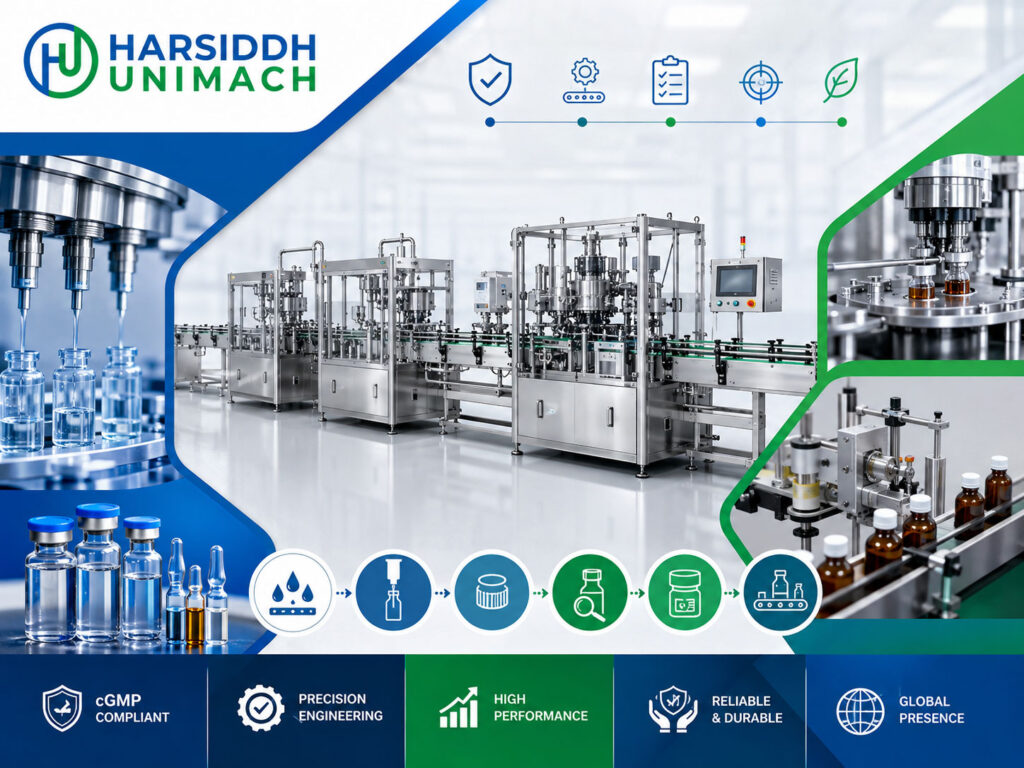
Packaging is far more than a box around a medicine. In the pharmaceutical industry, packaging protects the product from contamination and degradation, delivers the correct dose, carries critical information, supports traceability through the supply chain and helps patients use their medicines safely. Poor packaging can undermine even the best formulation.
At the same time, packaging must be produced efficiently, consistently and in compliance with regulations, often at high volumes and with frequent product changes. That makes the choice of packaging format and packaging machinery a strategic decision for every pharmaceutical manufacturer.
In this guide, we look at what makes pharmaceutical packaging effective, the different levels and formats of packaging, the machinery that produces them, and how to choose the right solution for your products.
What Makes Pharmaceutical Packaging Effective?
Effective pharmaceutical packaging achieves several goals at once:
| Goal | What It Means |
|---|---|
| Protection | Shields the product from contamination, moisture, oxygen, light and physical damage |
| Integrity | Keeps the container closed and sterile (where required) until use |
| Accurate dosing | Delivers the correct quantity in each pack or unit |
| Information | Carries correct, legible labelling: name, strength, batch, expiry, instructions |
| Traceability | Supports batch tracking and, in many markets, serialization of individual packs |
| Tamper evidence | Shows clearly if a pack has been opened |
| Patient usability | Easy to open (or child-resistant where required), easy to use |
| Compliance | Meets GMP and regulatory requirements |
| Efficiency | Can be produced reliably, at the right speed and cost |
| Sustainability | Minimises material use and waste where possible |
The Three Levels of Pharmaceutical Packaging
Primary packaging
Primary packaging is in direct contact with the product: vials, ampoules, bottles, tubes, syringes, blisters and sachets, along with their closures such as stoppers, caps and seals. It carries the greatest responsibility for protecting the product.
Secondary packaging
Secondary packaging surrounds the primary pack: cartons, leaflets, labels on cartons and trays. It provides additional protection, information and branding, and often carries serialization codes.
Tertiary packaging
Tertiary packaging groups products for shipping and storage: shipping cases, shrink-wrapped bundles and pallets. It protects products in transit and supports logistics.
Packaging Formats by Dosage Form
| Dosage Form | Common Primary Packaging | Key Packaging Requirements |
|---|---|---|
| Liquid injectables | Vials, ampoules, pre-filled syringes | Sterility, closure integrity, particle control |
| Dry powder injectables | Vials | Sterility, moisture protection, closure integrity |
| Oral liquids | Glass or PET bottles with ROPP or screw caps | Leak protection, dosing cup, tamper evidence |
| Dry syrups | Bottles with induction seals | Moisture protection, reconstitution instructions |
| Tablets and capsules | Bottles, blisters | Moisture protection, accurate count, child resistance where needed |
| Creams and ointments | Tubes, jars | Barrier properties, hygienic dispensing |
| Eye and ear drops | Dropper bottles | Sterility for ophthalmics, controlled dosing |
| Herbal and nutraceutical products | Bottles, jars, pouches | Protection, labelling, attractive presentation |
Common Packaging Materials and Their Properties
| Material | Typical Uses | Key Properties |
|---|---|---|
| Type I borosilicate glass | Vials, ampoules for injectables | Chemically resistant, good barrier, used for sensitive parenterals |
| Soda-lime glass | Bottles for oral liquids | Good barrier, lower cost, amber versions protect from light |
| HDPE | Tablet and capsule bottles, oral liquids | Tough, good moisture barrier, lightweight |
| PET | Oral liquid and cosmetic bottles | Clear, lightweight, good oxygen barrier |
| LDPE | Dropper bottles, squeeze bottles | Flexible, suitable for squeeze dispensing |
| Laminated tube material | Creams, gels, toothpaste | Barrier layers with flexible plastic surfaces |
| Aluminium | Ointment tubes, seals and caps | Excellent barrier, no suck-back in tubes |
| Elastomers | Vial stoppers, syringe plungers | Seal and reseal, compatibility with product is critical |
The right material depends on product compatibility, required barrier properties and how the product will be used. Material choices must be supported by stability and compatibility data.
The Machinery Behind Effective Packaging
Each packaging format relies on specialised machinery. Here is how the main formats are produced.
Injectable vials
Vials are washed, depyrogenated, filled, stoppered and sealed under controlled conditions. Key machines include fillers such as the liquid vial filling machine with rubber stoppering and sealers such as the vial cap sealing machine. Browse our vial filling machines. For more on sterile packaging, read a complete guide to aseptic packaging for liquid injectables.
Ampoules
Ampoules are filled and flame-sealed in a single machine, such as the eight head ampoule filling and sealing machine.
Bottles for oral liquids
Bottles are filled, capped with ROPP or screw caps, often fitted with a dosing cup and sealed with an induction seal. Key machines include cappers such as the bottle screw and ROPP capping machine, the automatic measuring cup placement machine and the induction sealing machine. Browse our capping machines.
Tablets and capsules in bottles
Electronic counters fill bottles with an exact number of units, followed by capping and induction sealing. See the tablet and capsule counting and filling machine and our tablet and capsule counting and filling machines.
Tubes for creams and ointments
Tube fillers fill and seal plastic, laminated or aluminium tubes in one machine. See the automatic single head tube filling machine (HTF-40A) and our tube filling machines.
Pouches
Spout pouches are increasingly used for some oral liquids, nutritional products and consumer health items. See the spout pouch filling machine.
Labelling
Labelling machines apply product labels with batch and expiry information to vials, ampoules, bottles, tubes and cartons. Browse our labeling machines.
Choosing the Right Level of Automation
| Level | Description | Suits |
|---|---|---|
| Manual | Operators fill, close and label by hand or with simple tools | Very small batches, trials |
| Semi-automatic | Machines perform key steps; operators load and unload | Small batches, start-ups, many products |
| Automatic standalone machines | Each step automated but separate | Growing production |
| Integrated lines | Machines linked and synchronised from container feed to packing | High-volume, dedicated production |
Higher automation improves consistency, reduces labour and supports compliance, but requires more investment and planning. Many manufacturers combine levels, running high-volume products on integrated lines while keeping semi-automatic equipment for small batches and new products.
Traceability and Serialization
Many markets now require, or are introducing, serialization: assigning a unique identifier to each saleable pack, often printed as a 2D code with the product code, serial number, batch and expiry. Packaging lines must be able to:
- Print codes reliably at line speed
- Verify every code with vision systems
- Reject packs with unreadable or missing codes
- Record and report data to the relevant systems
- Aggregate packs into cases and pallets where required
Serialization affects labelling, cartoning and case packing machinery. Read our guide to how serialization is transforming pharmaceutical packaging.
Quality Control in Packaging Operations
Effective packaging relies on consistent quality checks throughout the process:
- Incoming component checks – containers, closures, labels and cartons inspected against specifications
- Line clearance – removal of all materials from the previous batch before starting a new one, to prevent mix-ups
- In-process checks – fill volume or weight, closure torque or crimp quality, label correctness and code legibility
- Automatic inspection – vision systems for labels and codes, checkweighers, visual inspection for injectables
- Reconciliation – counting labels and printed components used, wasted and returned
- Documentation – batch records that capture every check and deviation
These controls protect patients and help manufacturers pass audits with confidence.
Validating Packaging Solutions
Before a packaging solution is used for commercial products, it must be shown to work reliably:
- Stability studies confirm that the container and closure protect the product throughout its shelf life
- Closure integrity testing verifies that seals remain intact, especially for sterile products
- Machine qualification (IQ, OQ, PQ) confirms that packaging machinery operates correctly and consistently
- Transport testing may be used to confirm that packs survive distribution
Changes to packaging materials, suppliers or machinery should go through change control and appropriate re-evaluation.
Patient-Centred Packaging
Effective packaging also considers the people who use the medicine:
- Easy-open features for elderly patients and those with limited hand strength
- Child-resistant closures where required
- Clear, legible labels and dosing instructions
- Dosing aids such as measuring cups, droppers and pre-filled syringes
- Tamper evidence that reassures patients the product is genuine and unopened
Sustainability in Pharmaceutical Packaging
Pharmaceutical packaging must protect the product first, but there is growing pressure to reduce its environmental impact:
- Right-sized packaging to reduce material and shipping volume
- Lighter materials where product protection allows
- Recyclable or mono-material packaging where approved
- Reduced waste from accurate filling, fewer rejects and less overpackaging
- Efficient machinery that uses less energy, water and compressed air
Any change to primary packaging must be carefully evaluated for product stability and regulatory impact. Read exploring sustainability: how pharma manufacturing is becoming greener.
Balancing Cost and Performance
Effective packaging does not have to be the most expensive. The goal is the right level of protection and functionality at a sustainable cost:
- Choose packaging formats that match the product’s real protection needs
- Automate where volumes justify it, and use semi-automatic solutions for smaller batches
- Reduce product loss and rejects through accurate, reliable machinery
- Consider total cost of ownership for packaging machinery, not just purchase price
Our article on cost-effective solutions for pharmaceutical and cosmetic packaging machinery explores this in more detail.
Working with a Packaging Machinery Partner
Effective packaging is easier with the right machinery partner. Look for a supplier who understands your dosage forms, can run trials with your containers and products, provides clear documentation for qualification, offers training and spare parts support, and can supply or integrate the complete line from filling and closing through to labelling. A good partner helps you avoid mismatched machines and brings practical experience from similar projects.
How to Choose the Right Packaging Solution
- Understand the product – dosage form, sensitivity to moisture, oxygen and light, sterility needs
- Define patient and market needs – dose, usability, child resistance, language and labelling rules
- Select the primary packaging format – vial, ampoule, bottle, tube, syringe, pouch
- Choose closures and seals – stoppers, caps, induction seals, tamper evidence
- Plan secondary and tertiary packaging – cartons, leaflets, cases, serialization
- Select machinery – matched to format, output and level of automation
- Plan line integration – from container preparation to final packing
- Validate – stability, closure integrity and machine qualification
- Review sustainability and cost – material use, waste and total cost
Common Packaging Challenges and Solutions
| Challenge | Solution |
|---|---|
| Leaking bottles | Correct capping torque, induction sealing, clean necks |
| Moisture-sensitive products | Induction seals, desiccants, suitable container materials |
| Sterility assurance | Aseptic filling, closure integrity, controlled environments |
| Label errors | Automated labelling with code verification |
| Frequent product changes | Flexible machines with quick changeovers |
| High reject rates | Accurate filling, gentle handling, good maintenance |
| Serialization requirements | Integrated printing, vision and data systems |
Frequently Asked Questions
What makes pharmaceutical packaging effective? It protects the product, maintains integrity, delivers the right dose, carries correct information, supports traceability, shows tampering, is easy for patients to use and can be produced efficiently and compliantly.
What are the three levels of pharmaceutical packaging? Primary (in contact with the product), secondary (cartons, leaflets, labels) and tertiary (cases and pallets for shipping).
Which packaging is used for injectables? Vials, ampoules and pre-filled syringes, produced under controlled or aseptic conditions with closures that ensure integrity.
How does serialization affect packaging? It requires unique codes on each pack, verified by vision systems and recorded in data systems, affecting labelling, cartoning and case packing.
Can pharmaceutical packaging be more sustainable? Yes, through right-sizing, lighter or recyclable materials where approved, less waste and efficient machinery, always without compromising product protection.
Looking for effective packaging machinery for your products? Contact our team or send an inquiry with your dosage forms, packaging formats and output targets.