
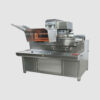

Semi Automatic Visual Ampoule Inspection Machine
High-Precision Quality Control for Sterile Injectable Manufacturing
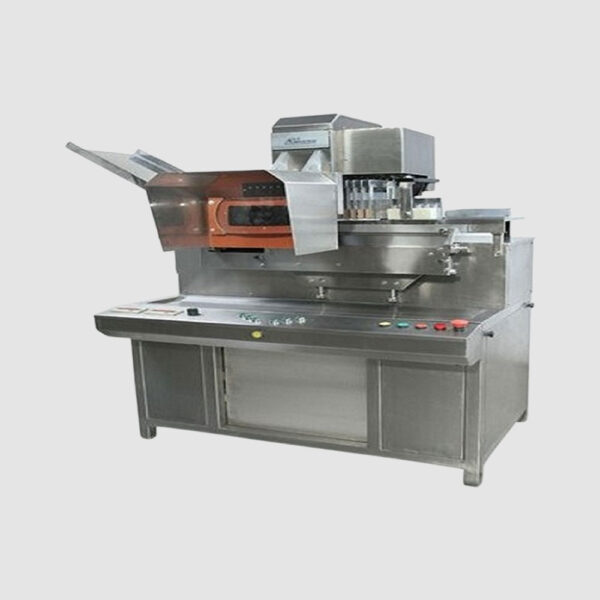
In pharmaceutical manufacturing, there is no room for compromise when it comes to patient safety and product purity. The Harsiddh Semi-Automatic Visual Ampoule & Vial Inspection Machine (Model: HINS-6A) represents the gold standard in critical quality control for sterile injectables. Engineered specifically to bridge the gap between manual handling and fully automated systems, the HINS-6A is an essential line of defense against contaminated, damaged, or sub-standard parenteral containers.
Whether operating a specialized pilot plant, a clinical trial facility, or a medium-scale commercial manufacturing line, ensuring 100% defect-free products is non-negotiable. The HINS-6A delivers this certainty by combining uncompromising mechanical stability with cutting-edge optical enhancements, giving operators the tools they need to achieve flawless visual verification.
Why Visual Inspection is Vital for Sterile Injectables
Sterile injectables skip the body’s natural gastrointestinal defenses, entering directly into the bloodstream. Consequently, the presence of foreign particulates, container integrity defects, or cosmetic anomalies can have severe clinical consequences and lead to costly product recalls, regulatory sanctions, and damage to brand reputation.
The Harsiddh HINS-6A is built to systematically eliminate these risks. It assists operators in detecting:
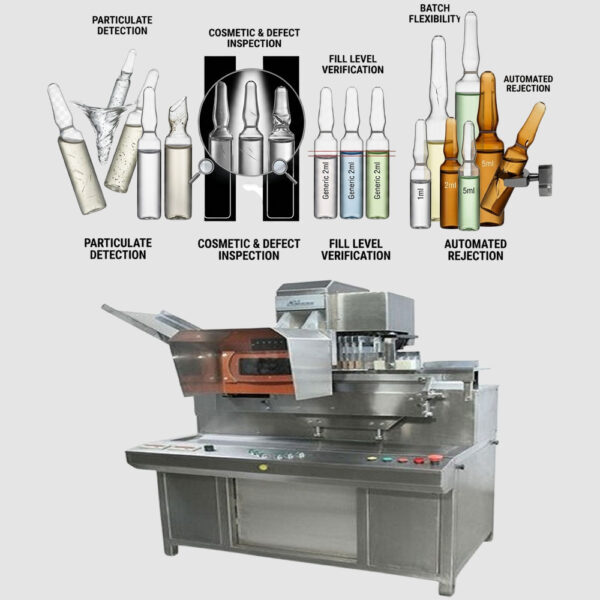
- Particulate Contamination: Moving glass fragments, lint, fibers, and microscopic dust particles.
- Container Integrity Defects: Hairline cracks, micro-fissures, chipped necks, and compromised seals.
- Fill Volume & Appearance Variations: Under-filled or over-filled containers, turbidity changes, and liquid discoloration.
Engineering Excellence: Key Features & Advantages
1. Advanced Optical Aids & The Tyndall Effect
At the heart of the HINS-6A’s detection capability is its optimized inspection booth. The machine utilizes a specialized dark-field illumination system that leverages the physics of the Tyndall Effect. By directing a concentrated, glare-free light beam through the liquid medium against a high-contrast matte black background, even the smallest floating particles scatter light, making them instantly visible to the human eye. To reduce operator eye strain and increase accuracy, a premium-grade magnifying lens is integrated directly into the viewing station, enhancing clarity without distorting the product.
2. Rapid Changeovers with a “No-Tool” Adjustment System
In modern pharmaceutical manufacturing, agility is key. The HINS-6A features an intelligent modular architecture that allows facilities to switch between different batch runs seamlessly. Equipped with a proprietary “no-tool” adjustment mechanism, operators can transition the machine between different container profiles in minutes.
- Ampoule Processing Range: Accommodates sizes from 1ml to 10ml.
- Vial Processing Range: Accommodates sizes from 2ml to 30ml.
This versatility eliminates prolonged operational downtime, maximizing overall equipment effectiveness (OEE).
3. Ergonomic & Operator-Centric Design
Visual inspection can be a fatiguing process, which directly impacts defect detection rates. Harsiddh has meticulously engineered the HINS-6A with operator ergonomics in mind. The height of the viewing booth, the angle of the magnifying lens, and the positioning of the reject triggers are optimized to minimize physical strain, maintain high cognitive alertness, and ensure consistent throughput over long shifts.
Detailed Step-by-Step Operational Workflow
The Harsiddh HINS-6A operates via a highly structured, synchronous workflow engineered to remove variability from the inspection process and maximize human performance.
Step 1: Smooth Infeed & Transportation
Containers are introduced to the machine via a specialized upstream conveyor or an integrated loading tray. The transport mechanism gently transfers the ampoules or vials onto specialized, non-marring inspection rollers. This smooth handling prevents glass-to-glass friction, eliminating the risk of cosmetic scuffing or stress fractures during initial loading.
Step 2: High-Speed Spinning & Fluid Agitation
As the containers enter the pre-inspection zone, the rollers rotate them at a precise, high velocity. This rapid spinning creates a vortex within the liquid, forcing any heavy sediment or floating particulates away from the bottom and into motion. When the rotation abruptly slows or stops just before entering the viewing zone, the liquid continues to swirl, ensuring that contaminants stay suspended and moving during the critical observation window.
Step 3: Visual Examination in the Dark Booth
The moving containers pass directly into the enclosed inspection chamber. Here, under the glare-free illumination of the Tyndall lighting system, the operator views the backlit, magnifying-lens-enhanced containers. Because the liquid is in motion while the container remains mechanically steady, the human eye can easily differentiate between stationary exterior marks (like dust on the glass surface) and moving interior foreign matter.
Step 4: Rapid Defect Identification
The operator scans the passing units for a pre-defined matrix of defects, including glass shards, fibers, product discoloration, incorrect filling levels, or tip-sealing irregularities in ampoules. The combination of high-contrast backdrops and dual-sided lighting means defects are highlighted instantaneously.
Step 5: Advanced Rejection & Sorting
Once a defective unit is spotted, the operator acts immediately. The HINS-6A is equipped with a highly responsive, foot-pedal or push-button activated pneumatic rejection mechanism. Pressing the button isolates the defective container without interrupting the flow of the rest of the batch. Alternatively, the operator can manually extract the unit depending on the facility’s standard operating procedures (SOPs). Accepted containers glide smoothly onward to the outfeed collection tray, ready for secondary packaging.
Compliance, Validation, and Quality Standards
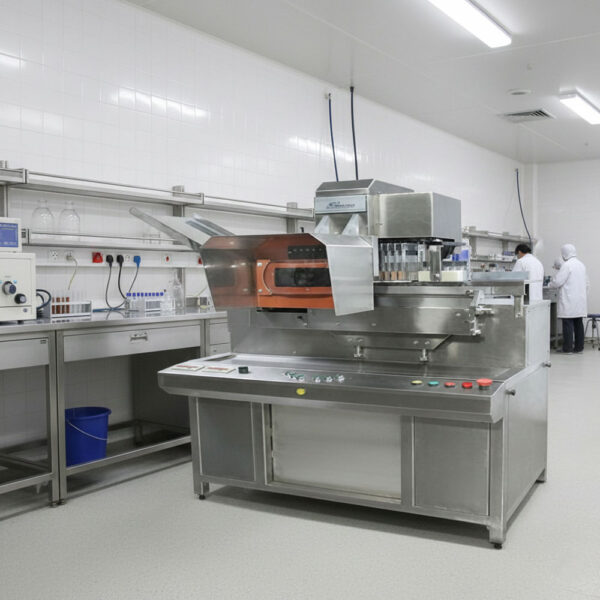
The HINS-6A is engineered and manufactured in strict compliance with current Good Manufacturing Practices (cGMP). We recognize that validation is a cornerstone of pharmaceutical operations. Therefore, the machine features clean, crevice-free stainless steel surfaces that resist harsh sanitizing agents and prevent microbial accumulation.
Harsiddh provides comprehensive documentation support to assist your quality assurance teams, including:
- IQ/OQ/PQ (Installation, Operational, and Performance Qualification) protocols.
- Material certificates for all contact parts.
- Comprehensive user manuals and maintenance schedules to assist with FDA, EMA, and WHO audits.
Technical Specification
| Feature | Details (HINS-6A) |
|---|---|
| Production Output | 50 to 70 units per minute |
| No. of Heads | 6 for Ampoules / 3 for Vials |
| Ampoule Range | 1 ml to 10 ml |
| Vial Range | 2 ml to 30 ml |
| Power Drive | 1.0 H.P. Main / 0.25 H.P. Spinning |
| Electrical Supply | 220V, Single Phase, 50 Hz |
| Construction | SS 304 (Matt Finish) |
| Dimensions (LxWxH) | 1500 mm x 1200 mm x 1575 mm |
Elevate Your Pharmaceutical Quality Assurance Today
Investing in the Harsiddh Semi-Automatic Visual Ampoule & Vial Inspection Machine (HINS-6A) means investing in ultimate product safety and operational efficiency. By blending reliable mechanical automation with optimal human viewing conditions, the HINS-6A minimizes false rejects while ensuring that not a single compromised vial or ampoule slips through to distribution.
Protect your patients, secure your supply chain, and future-proof your quality control processes.
Frequently Asked Questions
How does the "Semi-Automatic" inspection process work?
The machine automates the movement and presentation of the ampoules to reduce operator fatigue and increase accuracy.
Automatic Rotation: Ampoules are fed onto a conveyor where they are spun at high speeds and then suddenly stopped or slowed.
Visual Detection: The spinning motion agitates any heavy particles, making them move and become easily visible against the illuminated background.
Manual Rejection: While the machine handles the mechanical rotation and transport, the operator visually confirms the quality and manually removes any defective units.
What kind of lighting and visual aids are used to assist the operator?
To ensure high-precision detection, the Harsiddh inspection machine is equipped with:
Dual Backgrounds: A combination of Black and White backgrounds to help detect both light-colored and dark-colored particles.
Flicker-Free LED Lighting: High-intensity, non-glare illumination that highlights impurities without causing eye strain for the operator.
Magnifying Lens: A large, adjustable magnifying glass is positioned in front of the inspection zone to provide a clear, detailed view of the liquid and the ampoule seal.
What is the production capacity and ampoule size range?
This machine is designed for efficient, medium-to-high-speed throughput:
Output: Depending on the operator's speed and the product's clarity, it can inspect 30 to 80 ampoules per minute (approximately 1,800 to 4,800 per hour).
Ampoule Range: It is highly versatile and can accommodate standard glass ampoules from 1ml to 25ml with minimal adjustments to the conveyor guides and rollers.
What are the key cGMP and ergonomic features of this machine?
As a cGMP-compliant unit built for sterile pharmaceutical environments:
Material Integrity: The main structure is fabricated from polished SS 304, ensuring it is easy to sanitize and resistant to corrosion.
Compact Design: Its ergonomic layout ensures the operator can sit comfortably with the inspection zone at eye level, reducing physical strain during long shifts.
Low Maintenance: The machine features a simple mechanical drive with few wearing parts, ensuring long-term reliability and minimal downtime.