
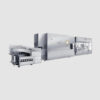

High-Performance Automatic Liquid Vial Filling Line (Liquid Vial Compact Line)
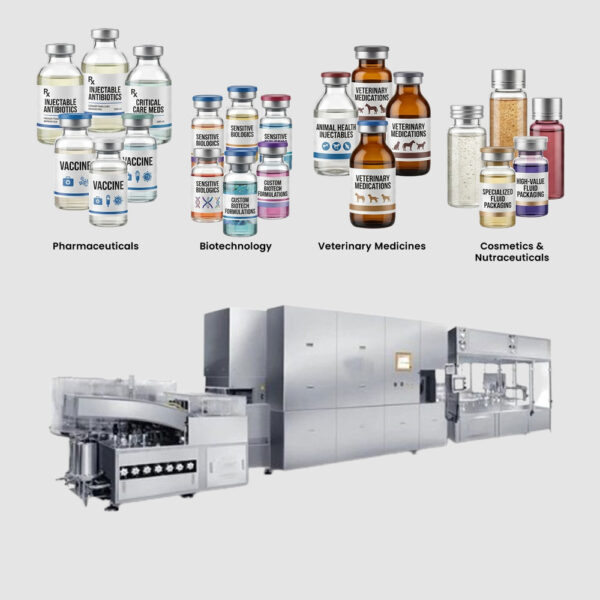
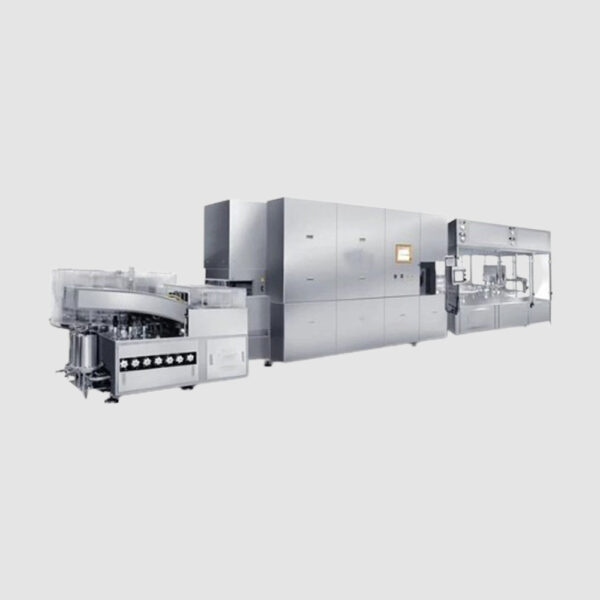
In high-stakes pharmaceutical manufacturing, speed, sterility, and absolute dosing accuracy are non-negotiable. The Harsiddh Automatic Liquid Vial Filling Line (Liquid Vial Compact Line) represents a pinnacle of engineering excellence, tailored specifically for high-capacity injectable and parenteral drug production. This fully integrated, synchronized turnkey solution automates the critical progression of glass vials through washing, sterilization, precision liquid filling, rubber stoppering, and secure aluminum capping.
Engineered strictly in compliance with cGMP, WHO, and US-FDA standards, this high-speed line minimizes human intervention, eliminates contamination vectors, and optimizes operational efficiency for modern pharmaceutical facilities.
The Concept of a Compact, Synchronized Production Line
Modern parenteral manufacturing demands a continuous, seamless workflow. Fragmented systems with independent, disconnected machinery introduce unnecessary risks—such as human handling contamination, vial breakage, and un-synchronized production bottlenecks.
The Harsiddh Liquid Vial Compact Line solves this by establishing an unbroken, automated chain of custody for every vial. From the moment raw vials enter the washing stage to the second they leave the capping module as fully sealed, retail-ready products, they move via a highly controlled, synchronized transport system. This continuous flow prevents glass-to-glass scuffing, reduces acoustic noise, and ensures that the output rate of each machine matches perfectly with the next.
Step-by-Step Machine breakdown & Technical Anatomy
1. High-Speed Multi-Jet Vial Washing Machine
The journey to absolute sterility begins with eliminating all microscopic particulate matter, glass dust, and chemical residues from the interior and exterior of the vials.
- Multi-Jet Internal & External Cleaning: Vials are fed from a loading platform, automatically inverted, and positioned over a series of highly efficient, dedicated washing needles.
- Customized Multi-Cycle Washing: The unit is equipped with 8 to 12 distinct washing stations. The washing media cycle can be custom-programmed but typically utilizes sequential bursts of Recirculated Water, Purified Water, Water for Injection (WFI), and ultra-clean, oil-free Compressed Air to thoroughly blow dry the internal pockets.
- Massive Throughput and Flexibility: This module effortlessly handles processing speeds up to 300 vials per minute. It is incredibly versatile, accommodating standard ISO glass vials ranging from miniature 2 ml formats up to large 100 ml containers with minimal, tool-less changeover parts.
- Premium Metallurgy: All fluid-contact parts, pipelines, and nozzles are manufactured from AISI SS 316L to prevent corrosion and chemical leaching, while the main structural housing is constructed from rugged, easy-to-clean SS 304.
2. Continuous Depyrogenation & Sterilizing Tunnel
Directly following the wash cycle, wet vials are automatically transferred via a high-grade stainless steel mesh conveyor belt directly into the Depyrogenation Tunnel. This tunnel utilizes forced hot-air convection to dry, sterilize, and destroy pyrogens (bacterial endotoxins).
- Three-Zone Thermal Processing: The tunnel is divided into three distinct operational chambers:
- The Pre-heating Zone: Gradually evaporates residual moisture, preventing thermal shock and vial breakage.
- The Sterilization/Depyrogenation Zone: Exposes the glass to precisely regulated temperatures ranging between 250°C and 320°C. High-temperature HEPA filters ensure the air circulating over the vials remains completely pristine.
- The Cooling Zone: Gently brings the vials back down to room temperature using an integrated ISO 5 (Class 100) Laminar Airflow (LAF) system. This ensures that the vials remain under a sterile curtain right up until they cross into the filling zone.
- Smart Monitoring & Automation: Integrated PLC systems log real-time temperature profiles across all zones. If a temperature dip is detected, safety alarms sound, and the conveyor auto-adjusts to guarantee that no unsterilized vial ever reaches the filling station.
3. Precision Vial Filling & Stoppering Machine
Once cooled and sterilized, the vials slide directly onto the conveyor of the filling and stoppering unit. This machine is the operational heart of the line, requiring extreme mechanical precision and strict environmental isolation.
- Surgical Dosing Accuracy: Depending on product viscosity and customer preference, the system utilizes advanced servo-driven volumetric piston pumps or high-precision peristaltic pumps. It delivers a remarkable dosing accuracy of ±0.5%, significantly reducing product giveaway of expensive active pharmaceutical ingredients (APIs).
- Flexible Filling Head Configuration: To comfortably sustain the line speed of 300 VPM, the filling machine can be custom configured with anywhere from 4 to 12 filling heads. It features a “No Vial – No Filling” sensor system to prevent liquid wastage and messy cleanups.
- Versatile Rubber Stoppering: Immediately after receiving the liquid dose, the vial moves to the stoppering station. The mechanical pick-and-place matrix can be adjusted for Full Stoppering (for standard liquid injectables) or Partial Stoppering (leaving the plug half-raised for vials destined for a Lyophilization / freeze-drying chamber).
- Sterile Barrier Protection: The entire filling and stoppering theater operates under a dedicated Class 100 laminar airflow hood to maintain a positive-pressure sterile zone, isolating the exposed product from ambient room conditions.
4. Automatic Vial Capping & Sealing Machine
The final stage of the packaging process involves securing the rubber stopper with an aluminum or flip-off cap to create an airtight, tamper-evident hermetic seal.
- Broad Cap Compatibility: The heavy-duty capping head is highly adaptable, designed to effortlessly process 13mm, 20mm, 28mm, and 32mm aluminum or combined flip-off cap variations.
- Flawless Sealing Mechanisms: Available with either a rotary pick-and-place system or a spinning roller configuration. The continuous, uniform application of torque ensures that the aluminum cap binds tightly against the glass neck without exerting excessive downward pressure that could fracture the vial.
- In-Line Quality Inspection & Rejection: The capping machine features advanced integrated inspection sensors. If a vial passes through with a missing cap, a misplaced stopper, or a distorted seal, an automated, pneumatic in-line safety rejection system instantly sweeps the defective vial off the main conveyor and into a secure collection bin without interrupting the rest of the production run.
Technical Specifications & Compliance
| Feature | Specification |
|---|---|
| Output Speed | Up to 300 Vials / Minute (VPM) |
| Filling Range | 2 ml to 100 ml |
| Automation | Fully PLC Controlled with HMI Touch Screen |
| Compliance | cGMP, GAMP 5, 21 CFR Part 11 (Optional) |
| Validation Support | Complete DQ, IQ, OQ, PQ Documentation |
| Electrical Supply | 415V, 3 Phase, 50/60 Hz |
| Compressed Air | 6 bar (Dry & Oil-free) |
Why Choose the Harsiddh Compact Line?
Investing in the Harsiddh Liquid Vial Compact Line means equipping your pharmaceutical facility with a system built for long-term reliability, regulatory compliance, and a rapid return on investment.
- Uncompromised cGMP Design: Built entirely out of medical-grade stainless steel with mirror-polished surfaces, the line features zero dead-legs in piping, making clean-in-place (CIP) and sterilize-in-place (SIP) protocols seamless.
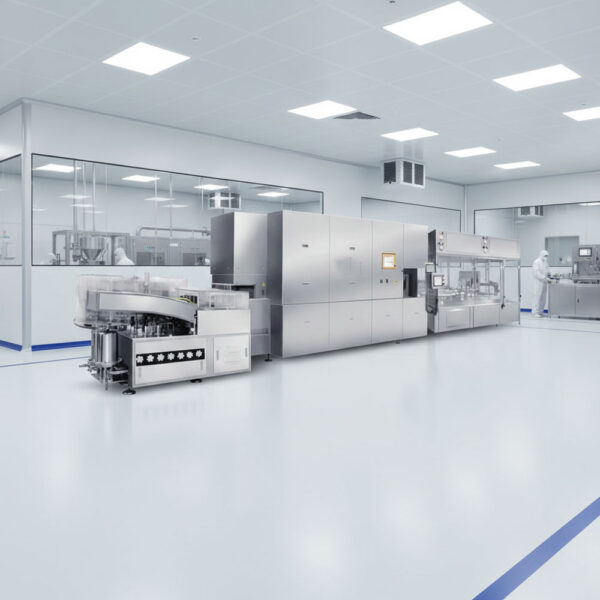
- Reduced Footprint: By tightly linking the components into a single “Compact Line” layout, it dramatically minimizes the required cleanroom floor space, lowering your facility’s operational heating, ventilation, and air conditioning (HVAC) overhead costs.
- Advanced Centralized PLC Control: The entire line can be integrated into a central SCADA/PLC interface with a user-friendly HMI touch screen. This allows operators to monitor temperatures, line speeds, and error logs from a single station, fully compliant with 21 CFR Part 11 for electronic data logging.
- Minimized Down-Time: With modular changeover parts designed for rapid adjustments, switching your production run from a 2ml vial to a 10ml vial can be completed efficiently, maximizing your facility’s weekly production yields.
Frequently Asked Questions
How does the machine ensure dosing accuracy for high-value injectables?
Precision is critical in vial filling to prevent product loss and ensure patient safety. The Harsiddh Compact Line utilizes:
Volumetric Piston Pumps: High-precision SS 316L syringes provide an accuracy of ±1%.
Peristaltic Pump Option: For biotech or highly sensitive products, peristaltic pumps can be used to ensure the liquid only touches medical-grade tubing, making cleaning and validation easier.
Diving Nozzles: To prevent foaming and splashing, the nozzles descend into the vial and retract as the liquid rises.
How is the "Stoppering" (Bunging) process managed in a sterile environment?
Immediately after filling, vials move to the stoppering station. The machine uses a vibratory bowl feeder to orient the rubber stoppers and a "pick-and-place" or "vacuum" mechanism to press them into the vial neck. To maintain sterility, this entire zone is typically operated under a Laminar Air Flow (LAF) unit, and the machine is designed with "Sleek Designs" to prevent air turbulence and dust accumulation.
What is the production capacity and vial size range?
The line is built for high-speed industrial output and is highly scalable:
Capacity: Depending on the number of heads (2, 4, 6, 8, or 12), the line can achieve speeds from 30 to 250 vials per minute.
Vial Range: It can handle vial sizes from 2ml to 100ml (glass or plastic) with minimal changeover parts. The "No Vial – No Fill" and "No Vial – No Stopper" sensors ensure that expensive medication and components are not wasted.
What are the key cGMP and safety features of the Harsiddh Compact Line?
As a cGMP-compliant unit for pharmaceutical use, the machine includes:
Material Integrity: All product contact parts are SS 316L, and the exterior structure is polished SS 304.
Safety Enclosure: A toughened glass or acrylic cabinet with safety interlocks protects the operator and maintains the integrity of the sterile zone.
Advanced Control: Controlled via a centralized PLC with a Touchscreen HMI, allowing for real-time monitoring of production counts, filling speed, and error logs.