
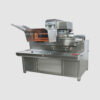

Semi Automatic Visual Vial Inspection Machine
Elevating Sterility and Integrity in Pharmaceutical Packaging
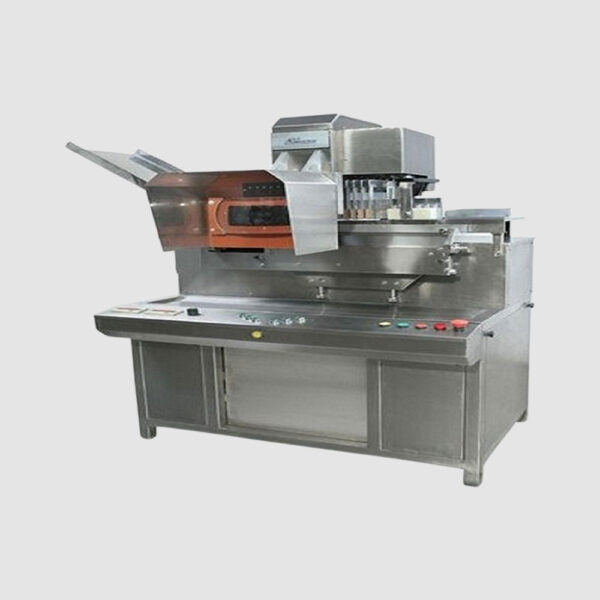
In the strict regulatory ecosystem of modern pharmacology, biotechnology, and veterinary medicine, product purity is non-negotiable. The Harsiddh Semi-Automatic Visual Vial Inspection Machine (Model HINS-V) provides a reliable defense against product contamination, container structural damage, and cosmetic inconsistencies.
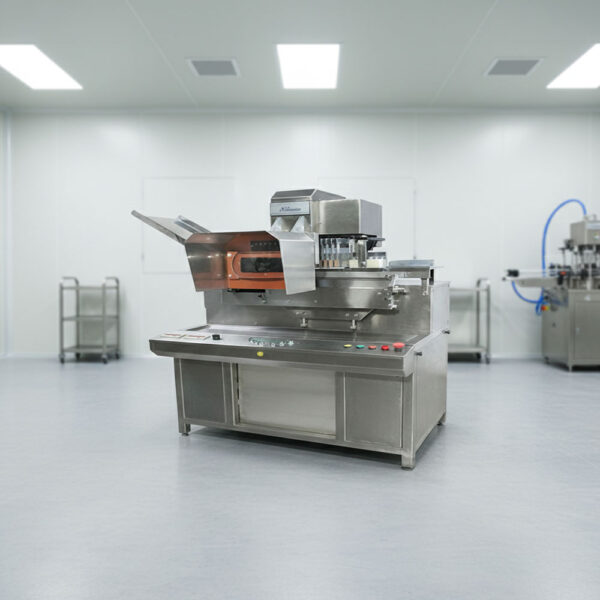
Engineered specifically for sterile injectables, lyophilized cakes, and dry powders, the HINS-V combines precision mechanical rotation with advanced optics. This allows operators to perform rigorous visual checks with enhanced precision, eliminating human fatigue and reducing false-reject rates. Whether deployed as an independent offline quality control station or integrated within a continuous production line between capping and labeling equipment, this cGMP-compliant system ensures compliance with global pharmacopeia standards.
Advanced Structural and Operational Features
1. Robust cGMP-Compliant Architecture
The HINS-V features a rigid, vibration-free chassis constructed from premium-grade SS 304 stainless steel, complete with an elegant, easy-to-sanitize matt finish. All direct mechanical contact components are fabricated from SS 316 stainless steel or high-density, non-reactive polymers (such as UHMW guides and Nylon-6 rollers). This layout entirely eliminates the risk of cross-contamination or container scuffing, preserving the sterile state of your primary packaging.
2. Variable Frequency Drive (VFD) Speed Control
Production demands fluctuate based on batch size, liquid viscosity, and operator shift schedules. The HINS-V incorporates a sensitive AC Variable Frequency Drive that allows managers to dynamically adjust the line conveyor speed. This fine-tuning ensures that vials traverse the inspection zone at a rate matching the exact tracking capability of the working team.
3. Integrated Anti-Jam Safety Systems
To mitigate line blockages and container breakage, the machine is equipped with automatic sensor-driven safety interrupts. If a vial experiences resistance, tips over, or tilts out of alignment within the conveyor track, the system pauses operation immediately. This prevents upstream glass collisions and reduces downtime.
4. High-Contrast Ergonomic Inspection Booth
Human error is minimized through a well-designed viewing interface. The machine features an integrated inspection booth that utilizes a split-screen black and white contrast background. Illuminated by a flicker-free, high-intensity LED light panel, this background highlights distinct defect profiles: light-colored particles (like glass shards or fibers) appear against the black field, while dark sediment or carbon specks show up clearly against the white backdrop.
Step-by-Step Mechanical Workflow
The HINS-V provides 100% inspection coverage through a highly structured, automated sequence that moves containers from unorganized intake to sorted discharge.
[Infeed Conveyor / Unscrambler]
               │
               ▼
   [Linear Indexing / Star Wheel]
               │
               ▼
[High-RPM Motorized Roller Agitation]  ──► (Creates Liquid Vortex)
               │
               ▼
  [Magnified Optical Inspection Zone]  ──► (Black/White Contrast Booth)
               │
               ▼
     [Defect Categorization]
               │
        ┌───────┴───────┐
        ▼               ▼
[Accepted Vials]   [Pneumatic/Manual Quarantine Bin]
               │
               ▼
[Labeling Line]
Step 1: Managed Feeding and Transport
Vials enter the machine directly from upstream capping stations or via an integrated rotary unscrambler table. A synchronized linear transfer rack or a precision-machined star wheel separates the incoming stream into a single file line, moving the vials into the primary inspection zone.
Step 2: High-RPM Spin and Vortex Generation
Once inside the inspection track, the vials come into contact with specialized motorized rollers. The system spins each container at a high RPM before bringing it to a controlled slowdown. This movement creates a miniature liquid vortex within the vial, suspending heavy particulate matter, fibers, and sediments that would otherwise remain hidden at the bottom of the container.
Step 3: Magnified Visual Examination
As the spinning fluid brings particles into motion, the vials pass behind a large, distortion-free optical magnifying lens positioned at the operator’s natural eye level. Under glare-free lighting, the operator can inspect the entire surface area of multiple vials simultaneously, checking the container walls, the base, the liquid fill level, and the cap seal integrity.
Step 4: Rapid Defect Categorization and Sorting
When a damaged or contaminated vial is discovered, the operator flags the unit without disrupting the conveyor flow. By using an integrated pneumatic switch, an ergonomic foot pedal, or manual separation lanes, the flawed unit is flagged within the machine’s memory logic.
Step 5: Diversion and Quarantine Discharge
At the final discharge terminal, accepted vials pass smoothly onto a collection conveyor heading toward the labeling machine. Meanwhile, any flagged or rejected units are automatically diverted by a pneumatic reject gate into a secure, enclosed quarantine bin for destructive testing or safe disposal.
Defect Detection Capabilities
The HINS-V helps quality control teams catch a wide range of structural, cosmetic, and physical defects, including:
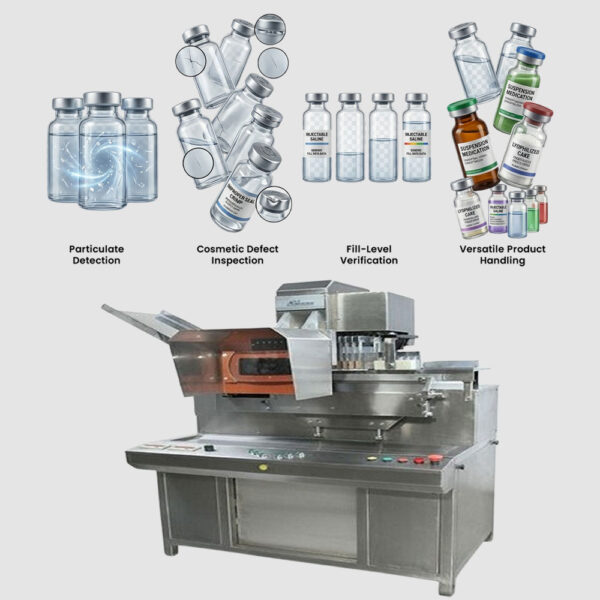
- Particulate Contamination: Detection of internal glass particles, rubber stoppers fragments, airborne dust, fibers, and metallic precipitates suspended within the solution.
- Container Physical Defects: Identification of micro-cracks, hairline fractures, structural chips, or pinholes in the glass walls or base.
- Closure and Cap Inconsistencies: Verification of correct aluminum cap crimping, missing rubber stoppers, skewed cap placement, and deformed seals.
- Fill Volume Fluctuations: Fast identification of underfilled or overfilled doses against the batch baseline.
- Lyophilized Cake Integrity: Visual confirmation of cake coloration, shrinking, cracking, or moisture ingress in freeze-dried products.
Technical Specification
| Feature | Details (HINS-V) |
|---|---|
| Production Output | 40 to 60 Vials Per Minute (Operator Dependent) |
| Vial Diameter Range | 22 mm to 100 mm |
| Vial Height Range | 58 mm to 240 mm |
| Number of Operators | Two (Dual-side configuration) |
| Power Drive | 0.5 HP to 1.0 HP (VFD Controlled) |
| Electrical Supply | 220 Volts, Single Phase, 50 Hz |
| Material of Construction | Stainless Steel 304 (Matt Finish) |
| Overall Dimensions | Approx. 1850 mm (L) x 700 mm (W) x 1550 mm (H) |
Why Choose the Harsiddh Visual Vial Inspection Machine?
- Higher Output with Less Fatigue: Moving from fully manual inspections to the HINS-V’s automated rollers and specialized illumination boosts throughput speeds without increasing operator eye strain or fatigue.
- Low Maintenance: Built with self-aligning bearings, long-lasting Nylon-6 rollers, and self-lubricating guides, the machine reduces long-term operational costs and mechanical wear.
- Seamless Line Integration: Thanks to its compact layout and adjustable height leveling bolts, the HINS-V integrates easily into existing filling, capping, and labeling lines.
- Flexible Changeovers: The machine handles a wide range of vial profiles (from 2 ml up to 30 ml and higher) with minimal changeover parts, making it an excellent fit for contract manufacturers handling diverse product lines.
Frequently Asked Questions
How does the "Semi-Automatic" inspection process work?
The machine automates the mechanical handling of vials to minimize human error and physical strain:
Automatic Rotation: Vials are fed onto a conveyor where they are spun at high speeds and then slowed down.
Agitation: The spinning motion agitates any heavy particles within the liquid, making them move and become highly visible to the inspector.
Manual Rejection: While the machine handles the transport and presentation of the vials, the operator visually confirms the quality and removes any defective units from the line.
What kind of lighting and visual aids are used to assist the operator?
To ensure high-precision detection of impurities, the Harsiddh inspection machine features:
Dual Backgrounds: A combination of Black and White backgrounds to help identify both light-colored and dark-colored particulate matter.
Flicker-Free LED Lighting: High-intensity, non-glare illumination that highlights impurities without causing eye fatigue for the operator.
Large Magnifying Lens: Positioned directly in front of the inspection zone to provide a clear, magnified view of the vial’s contents and seal integrity.
What is the production capacity and vial size range?
The machine is designed for efficient, medium-to-high-speed throughput in pharmaceutical lines:
Output: Depending on the operator's efficiency and the product's clarity, it can inspect 30 to 80 vials per minute (approximately 1,800 to 4,800 per hour).
Vial Range: It is highly versatile and can accommodate glass vials ranging from 2ml to 100ml with simple adjustments to the conveyor guides and rollers.
What are the key cGMP and ergonomic features of this machine?
As a cGMP-compliant unit built for sterile environments:
Material Integrity: The main structure is fabricated from polished SS 304 stainless steel, ensuring it is easy to sanitize and resistant to corrosion.
Ergonomic Design: The machine is built so the inspection zone sits at the operator's eye level, reducing physical strain during long shifts.
Low Maintenance: The simple mechanical drive system has few wearing parts, ensuring long-term reliability and minimal downtime.